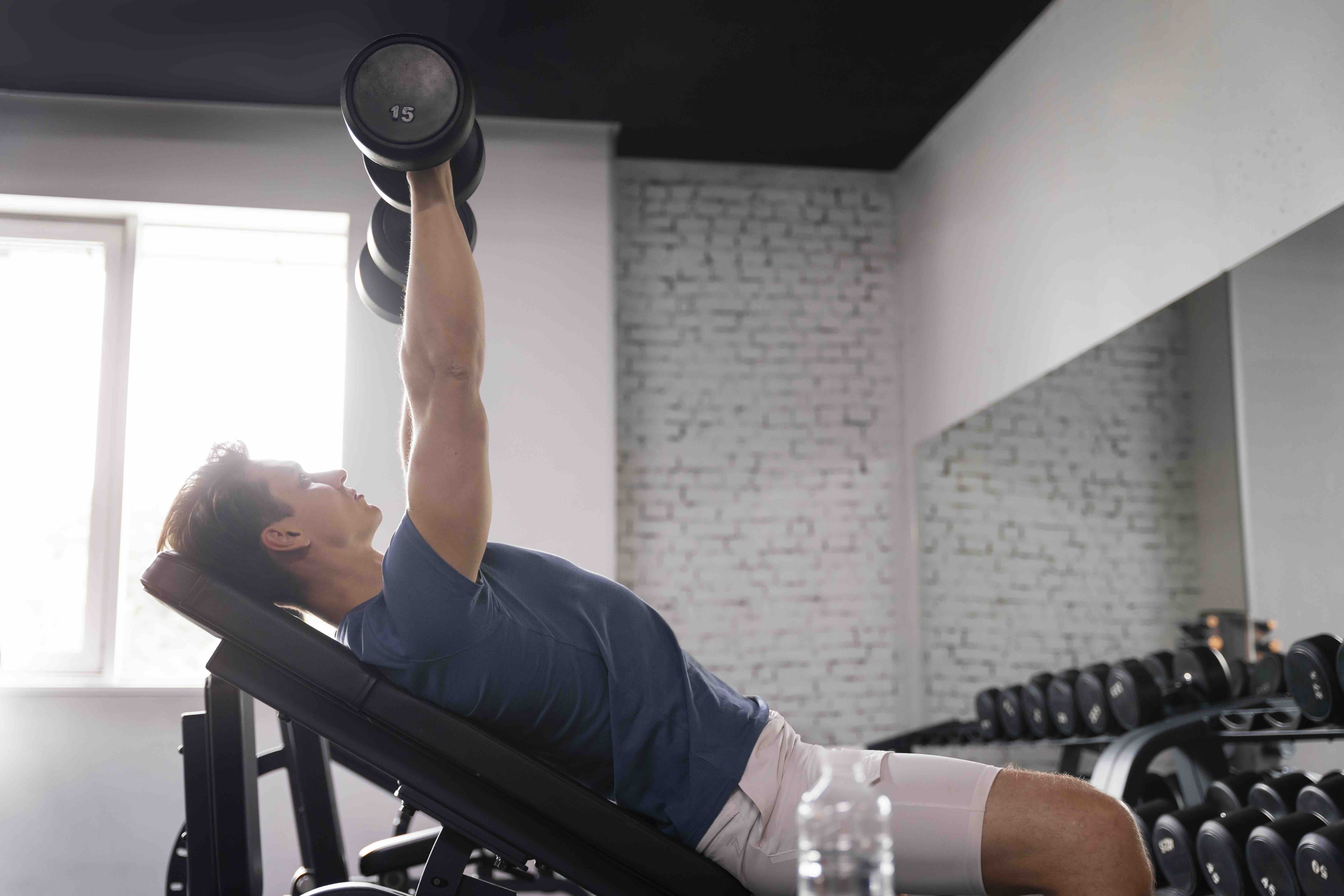
The incline dumbbell bench press is a powerhouse exercise that not only adds impressive definition to your chest but also strengthens your upper body comprehensively. This versatile movement can be an integral component of your workout routine, helping to enhance muscle growth, stability, and overall upper body strength. Let’s dive into the benefits, technique, and tips to master the incline dumbbell bench press.
Benefits of Incline Dumbbell Bench Press
Incorporating the incline dumbbell bench press into your fitness regimen offers numerous benefits:
- Targeted Muscle Growth: Focuses primarily on the upper pectoral muscles, which are often underdeveloped compared to the lower chest. This exercise helps build a well-rounded, fuller chest.
- Improved Muscle Symmetry: Dumbbells require each side of your body to work independently, enhancing muscle symmetry and correcting any imbalances.
- Increased Range of Motion: Allows for a greater range of motion than barbell presses, engaging more muscle fibers and contributing to better muscle development.
- Shoulder Activation: Engages the anterior deltoids more so than the flat bench press, promoting shoulder strength and stability.
How to Perform the Incline Dumbbell Bench Press
Proper form is crucial to maximizing the effectiveness of any exercise while minimizing the risk of injury. Follow these steps to perform the incline dumbbell bench press correctly:
- Set Your Bench: Adjust your bench to an incline of about 30 to 45 degrees. Too steep of an angle shifts more focus onto your shoulders rather than your chest.
- Starting Position: Sit down on the bench with a dumbbell in each hand. Rest the dumbbells on your knees as you lie back on the bench.
- Grip and Position: Once lying back, raise the dumbbells over your chest, arms fully extended, with palms facing forward.
- Execution: Lower the dumbbells slowly and in a controlled manner to your chest, keeping your elbows at about a 45-degree angle to your body. Pause briefly at the bottom, then press the dumbbells back up to the starting position while exhaling.
- Form Tips: Maintain a neutral spine throughout the movement. Avoid locking your elbows at the top to keep tension in your muscles.
Common Mistakes to Avoid
To get the most out of your incline dumbbell bench press, steer clear of these common mistakes:
- Incorrect Bench Angle: An incline too steep focuses too much on the shoulders, while an angle too shallow doesn’t adequately target the upper chest.
- Lack of Control: Don’t let gravity take over on the descent. Always control the dumbbells throughout the entire motion to engage your muscles effectively and prevent injuries.
- Poor Range of Motion: Lower the dumbbells sufficiently to fully engage the chest muscles, while keeping good form and preventing unnecessary strain on joints.
Conclusion
The incline dumbbell bench press is a crucial exercise for developing upper chest strength and aesthetics. By integrating this exercise into your training routine with proper form and technique, you can achieve balanced muscle development and enhanced upper body strength. Remember, consistency is key, and making small improvements over time will lead to significant progress. Prioritize form over quantity, and success will follow on your journey to achieving a strong, well-defined chest.