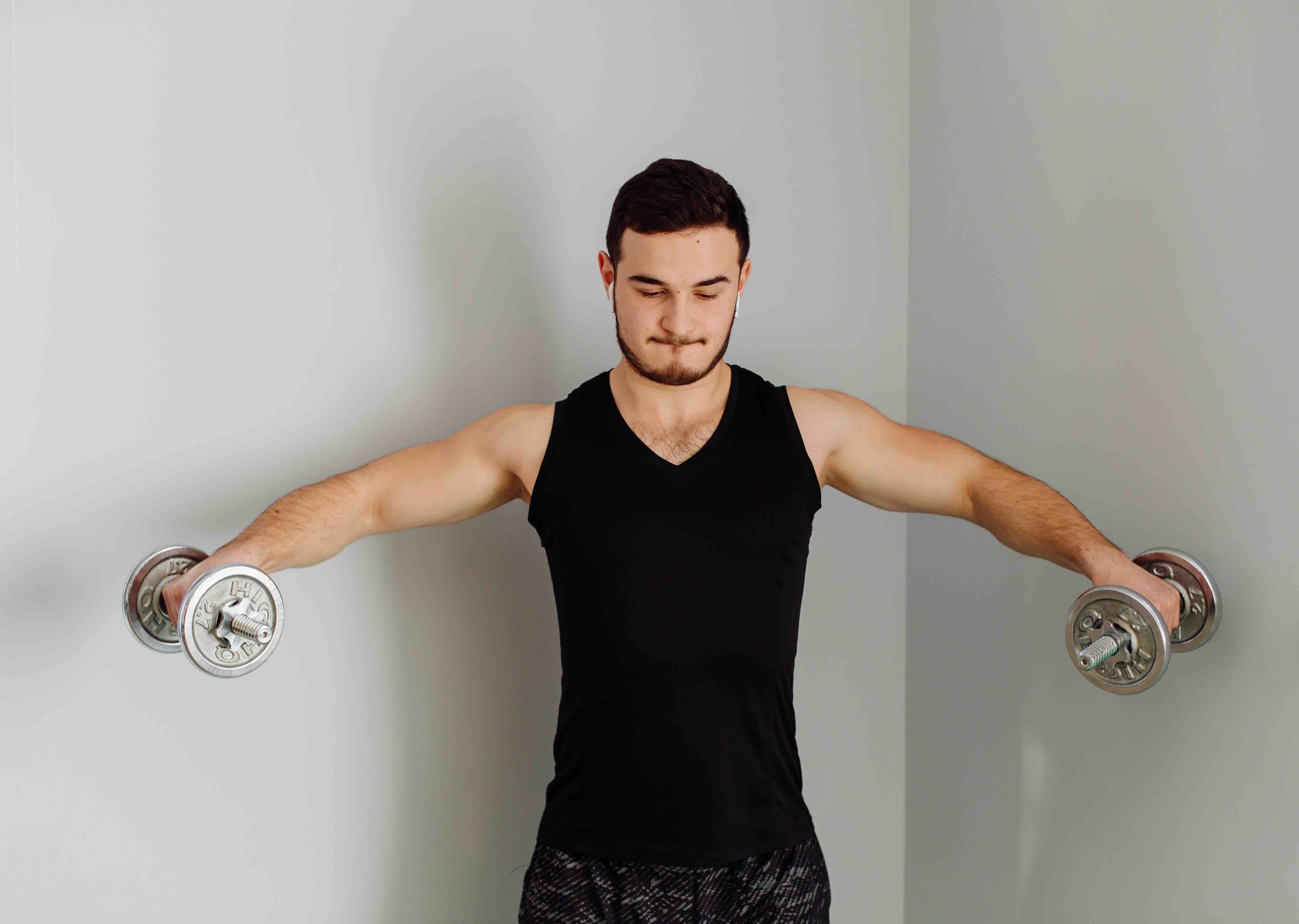
The dumbbell lateral raise is a staple exercise in any comprehensive shoulder training regimen. Renowned for its effectiveness in targeting the deltoid muscles, this exercise is crucial for developing broader and more defined shoulders. In this blog post, we'll delve into the benefits of the dumbbell lateral raise, proper form and technique, variations to try, and common mistakes to avoid.
Benefits of Dumbbell Lateral Raise
1. Targeted Shoulder Development: The primary focus of the dumbbell lateral raise is to isolate the lateral deltoids, which are often underdeveloped compared to the anterior and posterior deltoids. This ensures balanced shoulder strength and aesthetics.
2. Improved Shoulder Strength: Enhanced strength in the deltoid muscles contributes to better performance in various physical activities, such as lifting and pushing.
3. Enhanced Upper Body Aesthetics: Regularly incorporating lateral raises into your workout routine can contribute to a wider shoulder profile, creating an appealing shoulder-to-waist ratio.
Proper Form and Technique
To perform a dumbbell lateral raise with correct form, follow these steps:
- Start Position: Stand upright with feet shoulder-width apart. Hold a dumbbell in each hand with arms at your sides, palms facing your body.
- Execution: Keeping a slight bend in your elbows, raise the dumbbells out to the sides until your arms are parallel to the ground. Your elbows and hands should move together in harmony.
- Hold and Lower: Pause at the top of the movement then slowly lower the dumbbells back to the starting position.
- Repetition: Aim for 8-12 repetitions per set for optimal hypertrophy.
Remember, it's vital to engage your core throughout the exercise to maintain balance and prevent lower back strain.
Variations to Consider
To spice up your routine, consider incorporating these variations:
- Seated Dumbbell Lateral Raises: By sitting, you eliminate any leg involvement, forcing your shoulders to work harder. This intensifies the focus on your deltoids.
- Alternating Dumbbell Lateral Raises: Lifting one arm at a time increases time under tension, which can be beneficial for muscle growth.
- Cable Lateral Raises: Using a cable machine provides constant tension throughout the movement, making it a great alternative to dumbbells.
Common Mistakes and How to Avoid Them
1. Using too much weight: Heavy weights can compromise form, leading to potential injury. Opt for lighter weights to maintain control and focus on proper technique.
2. Raising weights too high: Avoid raising the weights above shoulder level, as this can place undue stress on the shoulder joints.
3. Swinging the Body: Keep your movements deliberate and controlled. Engaging other muscle groups to lift the weight will diminish the exercise's effectiveness.
The dumbbell lateral raise is a key exercise for anyone looking to enhance their shoulder musculature and overall upper body aesthetics. By focusing on proper technique and gradually incorporating variations, you can continuously challenge your muscles and promote growth. Happy lifting!