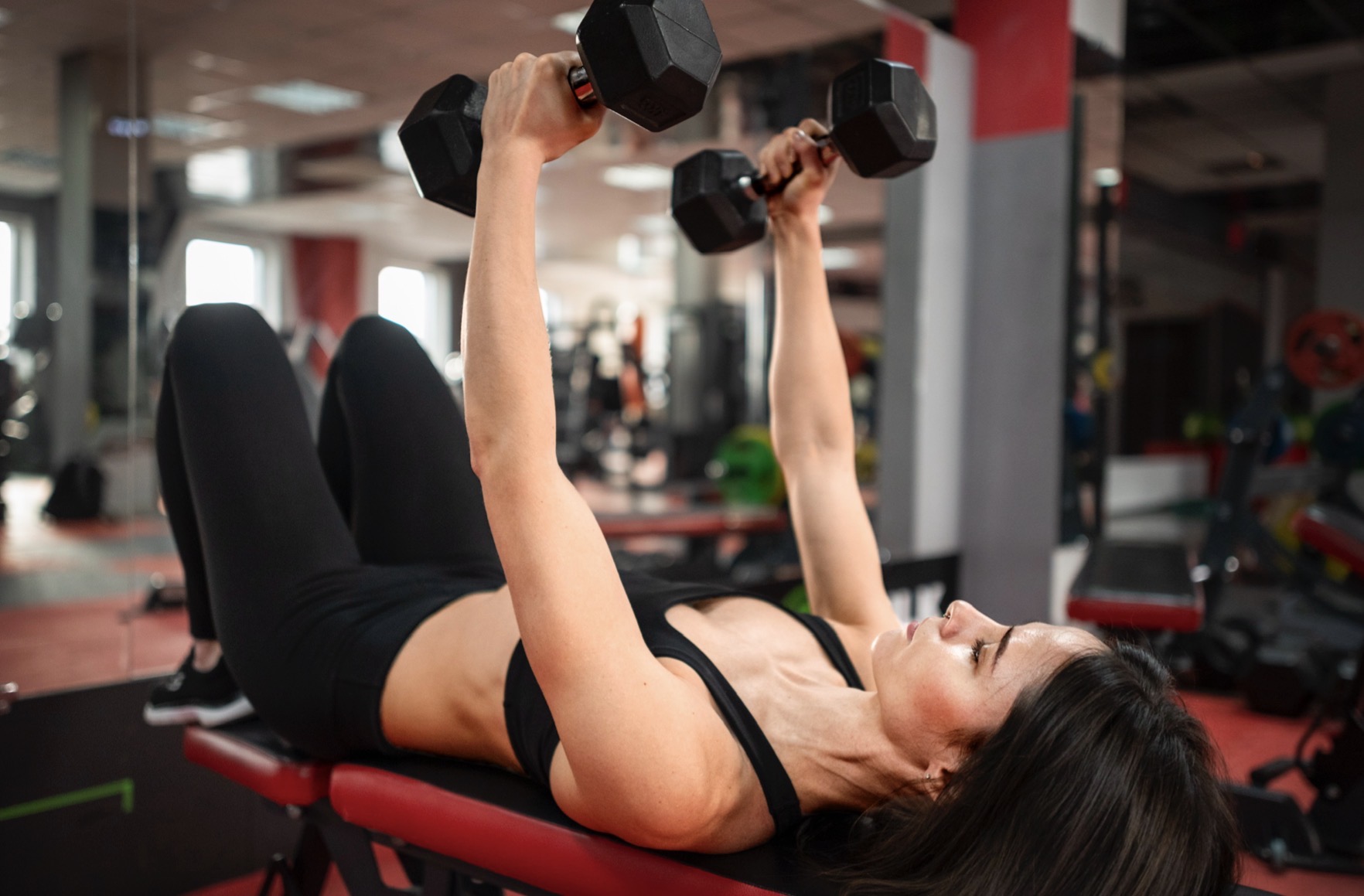
Introduction to Dumbbell Chest Press
The dumbbell chest press is a foundational exercise in strength training routines, renowned for targeting the major muscles in the chest, shoulders, and triceps. Whether you're a beginner to weightlifting or a seasoned athlete, incorporating dumbbell chest presses into your workout regime can help enhance your upper body strength, improve muscle symmetry, and contribute to overall functional fitness.
Benefits of Dumbbell Chest Press
- Improved Muscle Symmetry: Using dumbbells ensures each side of your body works independently, preventing muscle imbalance and promoting even muscle development.
- Increased Range of Motion: Compared to barbell presses, dumbbells allow for a greater range of motion, which can lead to better muscle activation and growth.
- Enhanced Muscle Activation: By stabilizing both weights independently, you engage more muscle fibers, which aids in building strength and size over time.
- Versatility: Dumbbell chest presses can be modified to target different parts of the chest by adjusting the angle of the bench or the position of your elbows.
How to Perform Dumbbell Chest Press
- Setup: Begin by selecting a pair of dumbbells appropriate for your strength level. Sit on a flat bench with the dumbbells resting on your thighs.
- Get into Position: Lie back on the bench, bringing the dumbbells to the sides of your chest as you do so. Your feet should be flat on the floor, providing stability.
- Execution: Press the dumbbells upwards, extending your arms fully but without locking your elbows. Your palms should face forward throughout the movement.
- Descent: Slowly lower the dumbbells back to the starting position, ensuring that your elbows drop just below the level of the bench to maximize stretch.
- Repetition: Repeat for the desired number of reps, maintaining a controlled tempo and focusing on form over speed.
Tips for Success
- Stabilize Your Core: Engage your core muscles to maintain a stable and supportive position on the bench.
- Avoid Overarching the Back: Keep your lower back pressed against the bench to prevent strain and maintain proper form.
- Control the Movement: Focus on both the lifting and lowering phases of the exercise for greater muscle tension and growth.
- Warm-Up Properly: Always warm up with lighter weights or dynamic stretches to prepare your muscles and joints for the workout.
Common Mistakes to Avoid
- Flared Elbows: Avoid allowing your elbows to flare out excessively, which can put unnecessary strain on your shoulders.
- Arching the Back: Keep your back flat on the bench to avoid pressure on your spine and ensure efficient force transfer.
- Using Too Much Weight: Choose a weight that allows you to maintain proper form throughout the set.
- Ineffective Breathing: Remember to inhale as you lower the weights and exhale as you press them up.
Conclusion
The dumbbell chest press is an essential exercise that should form part of your upper-body strength training routine. With its benefits for muscle symmetry, stability, and strength development, mastering this exercise can significantly contribute to your fitness goals. Remember to prioritize form and gradually progress to heavier weights as your strength improves. Happy lifting!